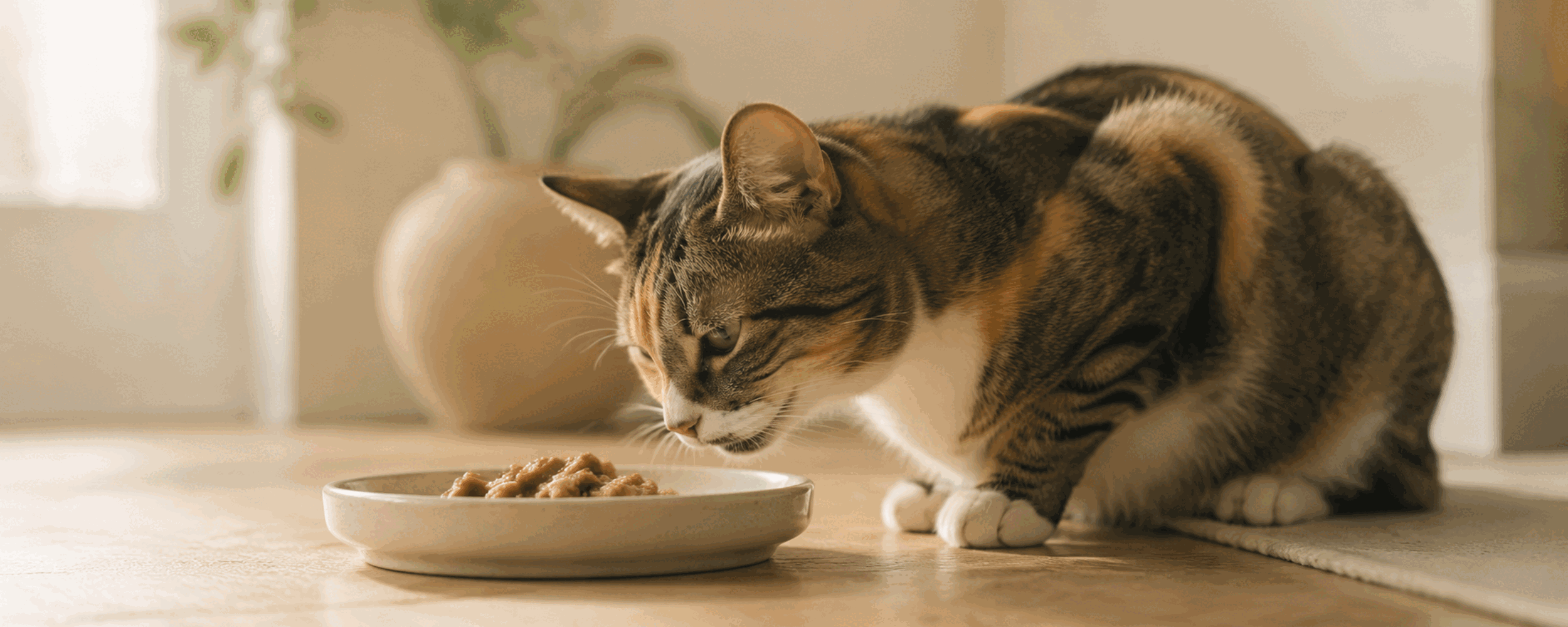
Your cat walks to the bowl, sniffs, and leaves. At the next meal, it happens again. It is tempting to call this pickiness and wait for hunger to win.
But “doesn’t like this food” and “is eating less overall” are not the same problem. A cat that rejects one flavor but eats a normal amount of a familiar alternative may be expressing a preference. A cat whose total intake has dropped may be showing pain, nausea, illness, stress, or difficulty smelling or swallowing food.
That distinction matters because cats can deteriorate while the household is still trying different toppers. The useful question is not simply, “Will my cat eat this?” It is: “How much has my cat actually eaten, and what changed?”
First, watch what happens at the bowl
The moments before your cat walks away can offer useful clues for your veterinarian.
A cat that seems hungry but cannot comfortably eat may approach the bowl, sniff, attempt a bite, drop food, chew on one side, drool, paw at the mouth, or retreat. Dental disease, mouth inflammation, an oral injury, or a swallowing problem can make eating painful even when appetite is present.
A cat with little interest in food may barely approach at all. Nausea, fever, kidney disease, diabetes, pancreatitis, and many other conditions can suppress appetite. Congestion can also make food less appealing because smell is central to a cat’s interest in a meal. Stress—from a move, boarding, a new animal, conflict near the feeding area, or an abrupt food change—can reduce intake too.
These patterns are clues, not diagnoses. A cat can have more than one problem at once, and subtle behavior does not reliably tell you which condition is responsible.
Why waiting can make the problem harder
Eating less can compound the original issue. The cat may become weaker or dehydrated, while the illness or pain that caused the appetite change continues untreated.
There is also a specifically feline concern: hepatic lipidosis, often called fatty liver disease. When a cat stops eating, the body begins moving stored fat to the liver for fuel. A cat’s liver may not process that sudden load effectively, and fat accumulates in liver cells. Overweight cats are at greater risk, but appetite loss in any cat deserves attention. Hepatic lipidosis is usually secondary to another condition, so treatment must address both nutrition and the underlying cause.
There is no single waiting period that is safe for every cat. Age, weight, current illness, medications, and how completely the cat has stopped eating all change the risk. Cornell’s Feline Health Center notes that persistent appetite loss can severely affect a mature cat in as little as 24 hours, and very young kittens can be affected much faster. Treat that as a reason to call promptly—not as a countdown that makes waiting until the last hour safe.
What to record before you call
Your veterinarian needs the clearest possible picture of total intake. If you have more than one pet, feed the cat separately so you can tell who ate what. Record:
- when the appetite change began;
- what food was offered and approximately how much disappeared;
- whether treats, table food, or another pet’s food were eaten;
- water intake and litter-box changes;
- vomiting, diarrhea, hiding, lethargy, weight loss, coughing, sneezing, or congestion;
- drooling, bad breath, food dropping, unusual chewing, or trouble swallowing;
- recent changes in food, medication, routine, home, or other animals.
A short video of the cat approaching the bowl can be surprisingly helpful. It may capture interest followed by discomfort, an attempt to chew, or a quick retreat that is difficult to describe later.
What you can try while arranging advice
Offer a familiar food in a quiet, comfortable feeding spot away from other animals and noisy appliances. A clean, shallow dish may be easier for some cats to use. Slightly warming wet food can increase its aroma, but check the temperature before serving it.
Do not turn the kitchen into an endless tasting menu. Rapidly opening different foods can obscure how little the cat is eating and may delay care. Do not assume a cat will eventually eat a prescribed or unfamiliar diet if left with no alternative; a cat that is already taking in too little needs a veterinarian-guided plan.
Avoid forcing food or liquid into an unwilling cat’s mouth unless a veterinarian has shown you exactly how and told you to do it. Force-feeding can increase distress and food aversion, and material placed in the mouth can be inhaled into the airway. If nutritional support is needed, your veterinarian can choose a safer method and treat nausea, pain, dehydration, or the underlying disease at the same time.
When to contact a veterinarian
Call your veterinarian the same day if your cat has stopped eating completely, is eating dramatically less than normal, or the change persists into another meal—especially if the cat is a kitten, senior, overweight, diabetic, or living with another chronic condition. When in doubt, tell the clinic the cat’s age, health history, last normal meal, and best estimate of intake; they can help determine the urgency.
Seek urgent or emergency veterinary care if appetite loss occurs with repeated vomiting, marked weakness or collapse, difficulty breathing, a swollen or painful abdomen, yellowing of the eyes or gums, heavy drooling or inability to swallow, or possible exposure to a toxin, string, or foreign object.
The goal is not to panic over one unusual meal. It is to notice when a food preference has become a meaningful drop in intake. “Picky” describes a choice. Appetite loss describes a change—and the sooner you identify which one you are seeing, the sooner your cat can get the right help.
Sources
- Cornell Feline Health Center, Anorexia
- Cornell Feline Health Center, Hepatic Lipidosis
- Merck Veterinary Manual, Feline Hepatic Lipidosis
- Cornell Feline Health Center, Feline Pancreatitis
- Merck Veterinary Manual, Dental Disorders of Cats
- Merck Veterinary Manual, Disorders of the Mouth in Cats
- Cornell Baker Institute for Animal Health, Feline Calicivirus
- Feline Veterinary Medical Association, Nursing Nutrition for the Hospitalized Inappetent Feline Patient
- WSAVA Global Nutrition Committee, Feeding Guide for Hospitalized Dogs and Cats