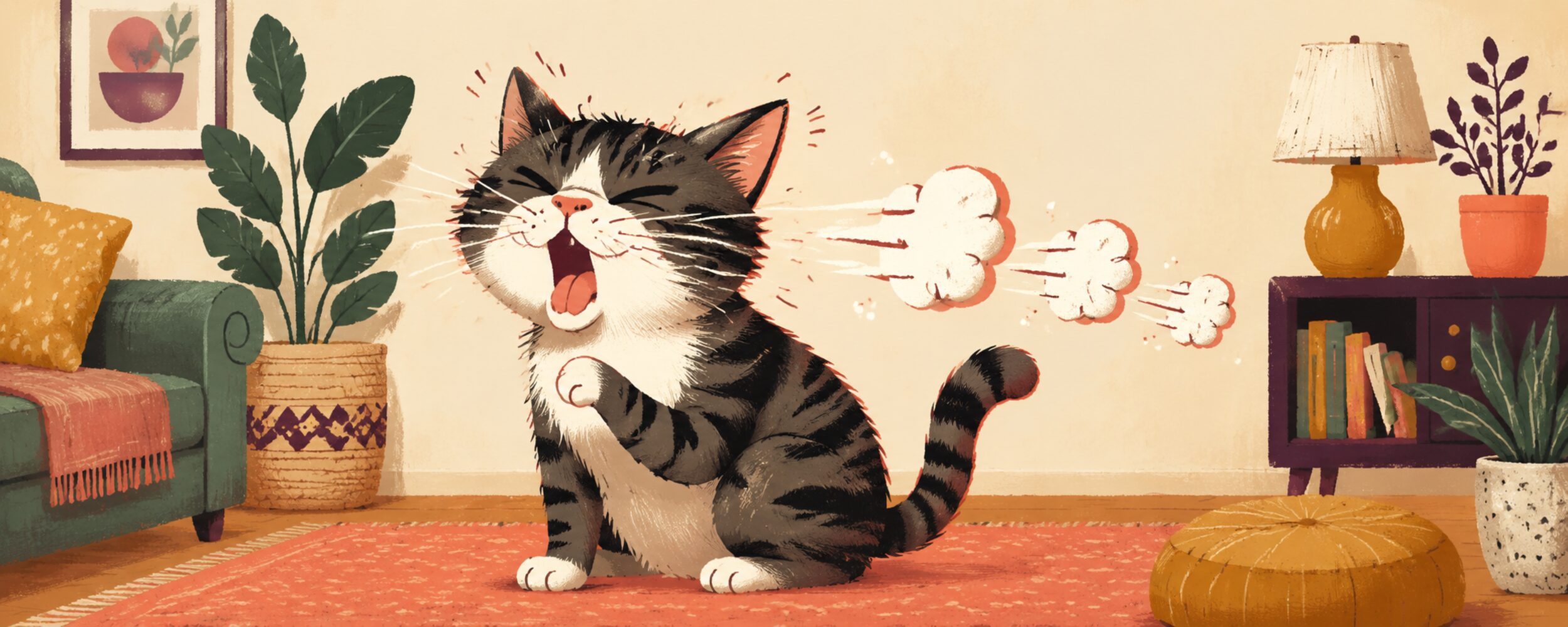
Your cat sneezes once at breakfast.
Then again from under the bed. Then three times in a row when they walk past the litter box.
The first explanation is usually “allergies.” Sometimes that is right. But a sneeze is a symptom, not a diagnosis—and the useful information is in the pattern around it.
Is your cat sneezing once every few days, or having repeated bouts? Is there discharge from the eyes or nose? Are they eating normally? Are they congested, quieter than usual, or working harder to breathe?
Those details tell you much more than the sneeze itself.
One sneeze and a repeated pattern are different problems
An isolated sneeze can happen for many ordinary reasons. A bit of dust, litter, fragrance, or another irritant may briefly bother the nasal passages, and the episode may disappear.
Repeated sneezing is different. It does not identify one specific disease, but it tells you to stop treating the symptom as background noise. Veterinary guidance lists repeated sneezing alongside changes in eye or nose discharge, appetite, energy, and breathing as signs worth paying attention to.
The first useful job is not to name the cause. It is to describe what is actually happening.
Record:
- how often the sneezing occurs;
- whether it comes in short bursts or continues throughout the day;
- when it started;
- whether the eyes or nose are producing discharge;
- whether the discharge is clear, thick, yellow, green, or bloody;
- whether your cat is congested, snoring, or breathing noisily;
- whether appetite, drinking, energy, or grooming has changed;
- whether there was a new litter, fragrance, cleaner, dusty room, smoke exposure, move, adoption, or contact with other cats.
A short video is often more useful than trying to recreate the sound at the clinic. If your cat has an episode, capture the breathing and the whole body—not only the face.
“Allergies” is one possibility, not the answer
Cats can react to things in their environment, but sneezing alone cannot establish that allergies are the cause.
Upper-respiratory infections can also cause sneezing. Cornell lists eye or nasal discharge, conjunctivitis, coughing, mouth ulcers, lethargy, and appetite loss among the signs that may accompany these infections. Different viruses, bacteria, fungi, and other organisms can affect the respiratory tract, so the same sneeze can sit inside very different clinical pictures.
That is why a cat that sneezes but otherwise seems normal is not automatically the same case as a cat that sneezes, squints, refuses food, and sounds congested.
The label matters less than what your cat is doing around the sneeze.
Watch the eyes and nose
Discharge changes the story.
Clear tearing or a small amount of clear nasal fluid can occur with irritation or an early respiratory problem. Thick or colored discharge, persistent crusting, swollen tissues around the eyes, or repeated eye closing deserves a veterinary conversation—especially when it continues or appears with other symptoms.
Do not assume that green or yellow discharge tells you exactly which organism is responsible. It is a sign to report, not a home diagnosis.
Bloody discharge, facial swelling, a visible wound that does not heal, or a persistent change in the way your cat’s voice or breathing sounds should not be managed as “seasonal allergies” without an examination. Chronic nasal disease can have causes that require more than removing a household irritant.
If discharge is present, take a photo before cleaning it away. You can gently wipe material from the outside of the nose or eyes with a clean, damp cloth if your cat tolerates it, but do not force the face open or put products into the nose or eyes unless your veterinarian has told you to.
Appetite is a respiratory clue too
A congested cat may not smell food as well. Mouth ulcers or inflammation can also make eating uncomfortable. That means appetite is not a side detail when a cat is sneezing.
Notice whether your cat:
- approaches food but backs away;
- chews differently or drools;
- prefers soft or strongly scented food;
- eats less than usual;
- stops eating altogether;
- is drinking normally.
A cat that is still eating normally and has a brief, isolated sneeze is a different concern from a cat that is sneezing and gradually leaving meals unfinished.
Do not wait indefinitely for appetite to return. VCA advises seeking immediate veterinary attention if a cat has not eaten properly for 24 hours. Kittens, older cats, and cats with existing illness may need an even earlier call because they can become unwell more quickly.
Congestion can hide the important change
Cats often conceal illness, so “they are still acting mostly normal” is not a complete safety check. Look for smaller changes: sleeping more, hiding, less grooming, a different posture, reduced play, or reluctance to move around.
Listen when your cat is resting. Noisy breathing, repeated swallowing, snoring that is new, or obvious nasal blockage can help your veterinarian understand how much the respiratory tract is involved.
Breathing effort is the line to take seriously. Open-mouth breathing, panting, shallow or labored breaths, an extended head and neck, blue-tinged gums, collapse, or an inability to settle into a normal resting position are not wait-and-see signs. Seek urgent veterinary care.
Sneezing is noisy. Breathing difficulty is the emergency.
When another cat may be part of the pattern
Some feline respiratory infections spread through respiratory secretions and droplets. Risk is higher in shelters, catteries, and homes with multiple cats, but an indoor cat is not automatically protected from exposure.
If one cat develops repeated sneezing plus eye or nose discharge, ask your veterinarian whether the cats should be separated temporarily and how to handle bowls, bedding, litter areas, and handwashing. Avoid sharing leftover medication between cats. A treatment that was appropriate for one episode or one animal may be wrong for another.
Vaccination reduces the severity of some respiratory diseases but does not make every respiratory infection impossible. A vaccinated cat that is sneezing still deserves the same pattern check.
What to do before the appointment
You do not need to solve the case at home. You need to preserve useful information and keep your cat comfortable while you decide how quickly to call.
Write down when the sneezing began and whether it is becoming more frequent. Photograph eye or nose discharge. Record a video of an episode and, if the breathing seems unusual, another video while your cat is resting. Note any appetite, energy, grooming, or litter-box change.
Petal can give you one place to keep your pet’s health notes, symptom changes, and care reminders before a vet visit. It is not a diagnosis, but a simple timeline can make it easier to remember what changed and explain it clearly.
Remove obvious irritants you recently introduced, such as smoke, strong fragrance, aerosol cleaners, or dusty litter, and improve ventilation. Do not use human cold medicines, essential oils, or leftover antibiotics as a shortcut. Cats can be harmed by products that seem ordinary to people, and antibiotics do not treat every cause of respiratory disease.
Call your veterinarian promptly for persistent or worsening sneezing, discharge, appetite change, mouth ulcers, facial swelling, or a cat who seems generally unwell. Seek urgent care for breathing difficulty or a cat that cannot eat or settle normally.
The sneeze is the opening clue
Your cat may have allergies. They may have an uncomplicated respiratory infection. They may have irritation from the environment, or a problem that needs a closer examination.
You cannot sort those possibilities from the sneeze alone.
Count the episodes. Look at the eyes and nose. Check appetite, congestion, energy, and breathing. That pattern gives your veterinarian a much better starting point—and it keeps “allergies” from becoming an answer you chose before you had enough information.
Sources
- Cornell University College of Veterinary Medicine, Respiratory Infections
- Cornell University College of Veterinary Medicine, Feline Calicivirus
- VCA Animal Hospitals, Recognizing the Signs of Illness in Cats