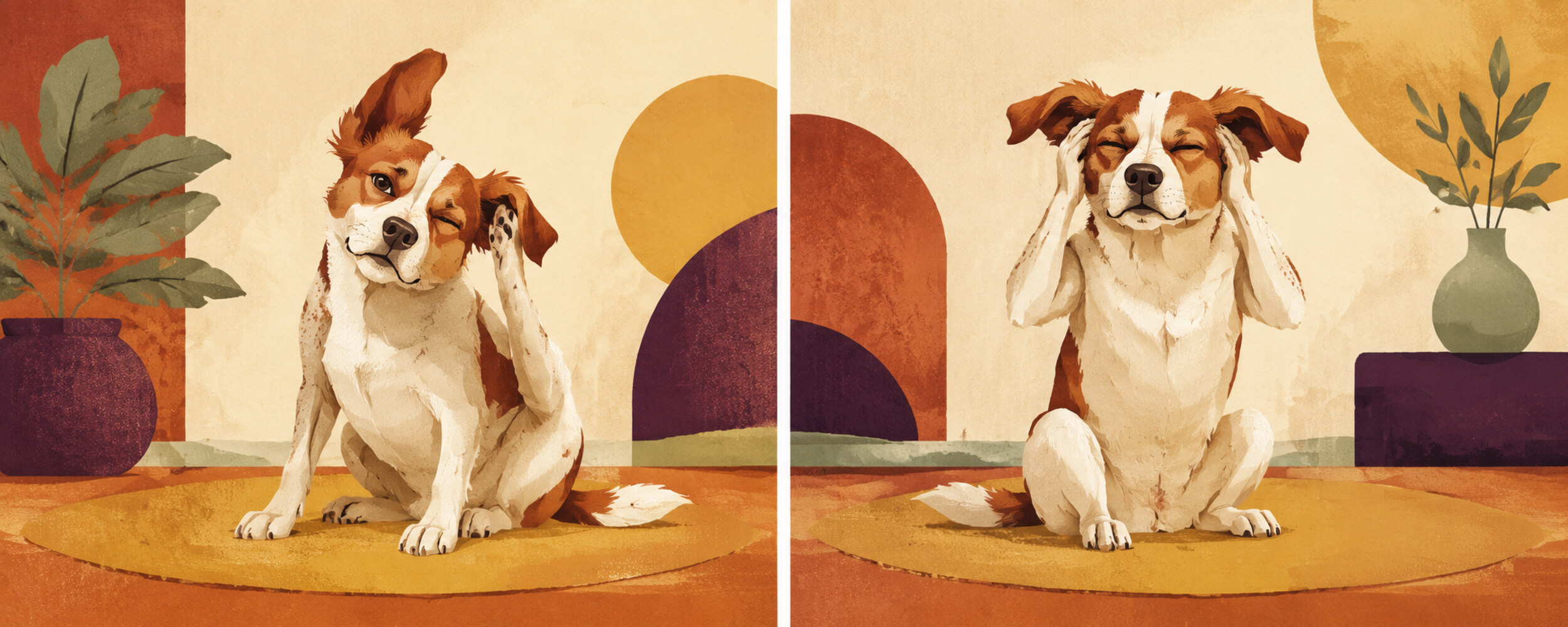
Your dog shakes their head hard enough to make their ears slap, scratches one side, pauses, and does it again. The natural first move is to reach for the ear cleaner.
Sometimes cleaning is part of the solution. But when the shaking is new, frequent, painful, or accompanied by odor or discharge, cleaning before you understand the pattern can erase useful clues, irritate an inflamed canal, or delay treatment for something cleaner cannot fix.
The first question is not, “What should I pour into the ear?”
It is: “What changed—and is this happening in one ear or both?”
Head shaking is a symptom, not a diagnosis
Dogs shake and scratch their ears for many reasons. The external ear canal may be inflamed because of allergies, parasites, a foreign object, excess moisture, a reaction to a product, or another underlying problem. Bacteria or yeast can then multiply inside that altered environment and become a secondary problem.
That is why “ear infection” does not always tell the whole story. Treating yeast or bacteria may settle the current flare, but the problem can return if the condition that changed the ear in the first place is still there.
The visible signs overlap too. Redness, itching, head shaking, odor, discharge, swelling, and pain can occur in different combinations and from different causes. Dark debris does not automatically prove ear mites. A bad smell does not tell you which organism is present. A dog acting normal between head shakes can still have a painful ear.
The pattern cannot diagnose the cause at home. It can, however, help your veterinarian decide what to look for first.
Start with one ear or both
Before cleaning anything, notice which side your dog chooses.
A sudden problem limited to one ear can make a localized issue more important to investigate. That might include plant material or another foreign object, a tick, a small injury, or an obstruction inside the canal. If the shaking began abruptly after a walk through long grass, outdoor play, grooming, or another specific event, mention that timing to your veterinarian.
Problems affecting both ears—especially when they recur or appear alongside itchy paws, face rubbing, or skin trouble elsewhere—can make a broader inflammatory condition such as allergy more relevant. Allergic inflammation can affect the ears first, and secondary yeast or bacterial overgrowth may follow.
These are clues, not rules. Allergies can make one ear look worse than the other. An infection can affect one ear or both. Ear mites are less common in adult dogs than many owners assume, but exposure history matters. A chronic one-sided problem can also require investigation for structural changes or a growth.
The value of the left-or-right detail is not that it gives you an answer. It prevents every itchy ear from being treated as the same problem.
Look before you clean
You do not need to probe the ear canal. Observe what you can safely see and record what happens.
Notice:
- whether the dog favors the left ear, right ear, or both;
- when the shaking began and how often it happens;
- whether the ear smells different from the other one;
- wax or discharge at the opening, including its color and consistency;
- redness, moisture, swelling, crusting, or visible scratches;
- flinching, crying, pulling away, or reluctance to have the ear touched;
- recent swimming, bathing, grooming, or time in long grass;
- itching elsewhere on the body;
- previous ear problems, allergies, and anything already placed in the ear.
A photo of the ear opening and a short video of the head shaking can be more useful than trying to describe the movement from memory. If discharge is present, photograph it before wiping the visible outer flap.
Do not push a cotton swab, finger, tool, or bottle tip down the canal. A dog’s ear canal bends, so you cannot see the eardrum from the entrance. If the ear is painful, do not repeatedly handle it just to complete the checklist.
Why cleaner may be the wrong first move
A veterinarian may want a sample of the material in the ear before it is cleaned. Examining that sample under a microscope can reveal yeast, bacteria, inflammatory cells, or mites and help guide treatment. Cleaning first may remove or change some of that evidence.
The condition of the eardrum matters too. A veterinarian uses an otoscope to look for a foreign body, examine the canal, and check whether the eardrum appears intact. That information influences which products and medications are safe. Severe swelling, pain, or packed debris can make a complete exam difficult and may require a different approach.
Cleaning an already inflamed ear can hurt. Cornell advises stopping an at-home cleaning if the dog appears painful and consulting a veterinarian; in severe infections, cleaning may be delayed until medication reduces pain and inflammation. Alcohol and hydrogen peroxide can also irritate the ear, and Merck lists overcleaning as a possible secondary contributor to external ear inflammation.
This does not mean healthy ears should never be cleaned. Dogs with a veterinarian-approved maintenance routine, recurrent moisture problems, or ears that get wet during swimming may benefit from appropriate cleaning and drying. A normal ear with visible dirt is different from an ear that suddenly smells, drains, hurts, or triggers repeated head shaking.
When active symptoms are present, call the clinic and ask whether they want the ear left untreated before the appointment. Do not use leftover prescription drops from a previous episode unless your veterinarian specifically tells you to. A product chosen for the last problem may be inappropriate for the current one.
What the examination can answer
The veterinary visit is not simply a more thorough cleaning.
An otoscopic examination can reveal swelling, ulceration, a foreign object, a mass, excessive debris, and changes around the eardrum. A microscopic examination of material from the canal helps distinguish microbial overgrowth and inflammation. The rest of the skin may be checked for signs that an allergy or another underlying condition is affecting more than the ear.
That combination matters because treatment depends on the cause. A foreign object needs to be removed. Pain and swelling may need to be controlled before the canal can be examined properly. Yeast and different types of bacteria do not all call for the same medication. Recurrent ear trouble may not stop until the underlying inflammation is addressed.
The examination also protects against treating the symptom while missing a deeper problem.
Know when the head shake needs faster care
Contact your veterinarian promptly when head shaking is frequent or persistent, particularly if you also notice odor, discharge, redness, swelling, pain, or a sudden change after outdoor activity. A soft, puffy swelling of the ear flap can be an aural hematoma, which can form when vigorous shaking or scratching damages a blood vessel.
Seek urgent veterinary guidance if your dog develops a head tilt, stumbling, circling, difficulty standing, rapid involuntary eye movements, facial drooping, sudden hearing changes, severe pain, bloody or pus-like discharge, or scratches the face or ear until it is injured. These signs can occur when disease extends beyond a mildly irritated external ear.
If you suspect a grass awn or another object entered the ear, do not try to flush or grab it blindly. Material lodged deeper in the canal may require an otoscope, sedation, and careful removal.
Let the pattern reach the appointment intact
The goal is not to avoid cleaning forever. It is to avoid making cleaning the automatic response to every head shake.
Which ear is involved, how suddenly it started, what the ear looks and smells like, whether water or outdoor activity came first, and how painful the ear seems are all pieces of the history. Preserve those clues, record them, and let the examination determine what belongs in the ear.
The cleaner can wait long enough for one better first move: read the pattern.
Sources
- Cornell University College of Veterinary Medicine, Itchy Ear Problems
- Cornell University College of Veterinary Medicine, How to Clean Your Dog’s Ears
- Merck Veterinary Manual, Otitis Externa in Animals